

Are Online Music Lessons Worth It?
Everything you need to know before you book your first lesson
Written by Chris — Owner of La Di Da Lessons | Updated May 2026
Online music lessons are absolutely worth it for many students — especially beginners, kids with busy family schedules, adult learners, and anyone who wants consistent one-on-one instruction without the stress of commuting.

The real question is not simply, “Do online music lessons work?” A better question is: Are online music lessons a good fit for the student, the family, the teacher, and the learning setup?
When online lessons are taught by a skilled instructor, supported by a simple home setup, and paired with regular practice, they can be just as meaningful and productive as in-person lessons. In some cases, they are even more convenient, consistent, and comfortable for students.
At La Di Da Lessons, we have seen students make real musical progress through online lessons in piano, guitar, voice, ukulele, violin, viola, drums, electric bass, songwriting, and more. Online lessons work best when the experience is personal, organized, encouraging, and built around the student’s goals.
The Benefits of Online Music Lessons
Convenience
No commuting, traffic, or waiting rooms. Students can learn from the comfort of home on a schedule that works for the family.
Flexibility
Online lessons can be easier to fit into busy family schedules, school activities, work hours, and travel plans.
Access to More Teachers
Location does not limit your options. Families can choose from instructors who are the best fit for the student’s instrument, personality, and goals.
Learn in Your Own Space
Many students feel more relaxed at home, which can make it easier to ask questions, try new things, and build confidence.
Consistent Weekly Progress
When lessons are easier to attend regularly, students are more likely to stay connected to their goals and keep making progress.
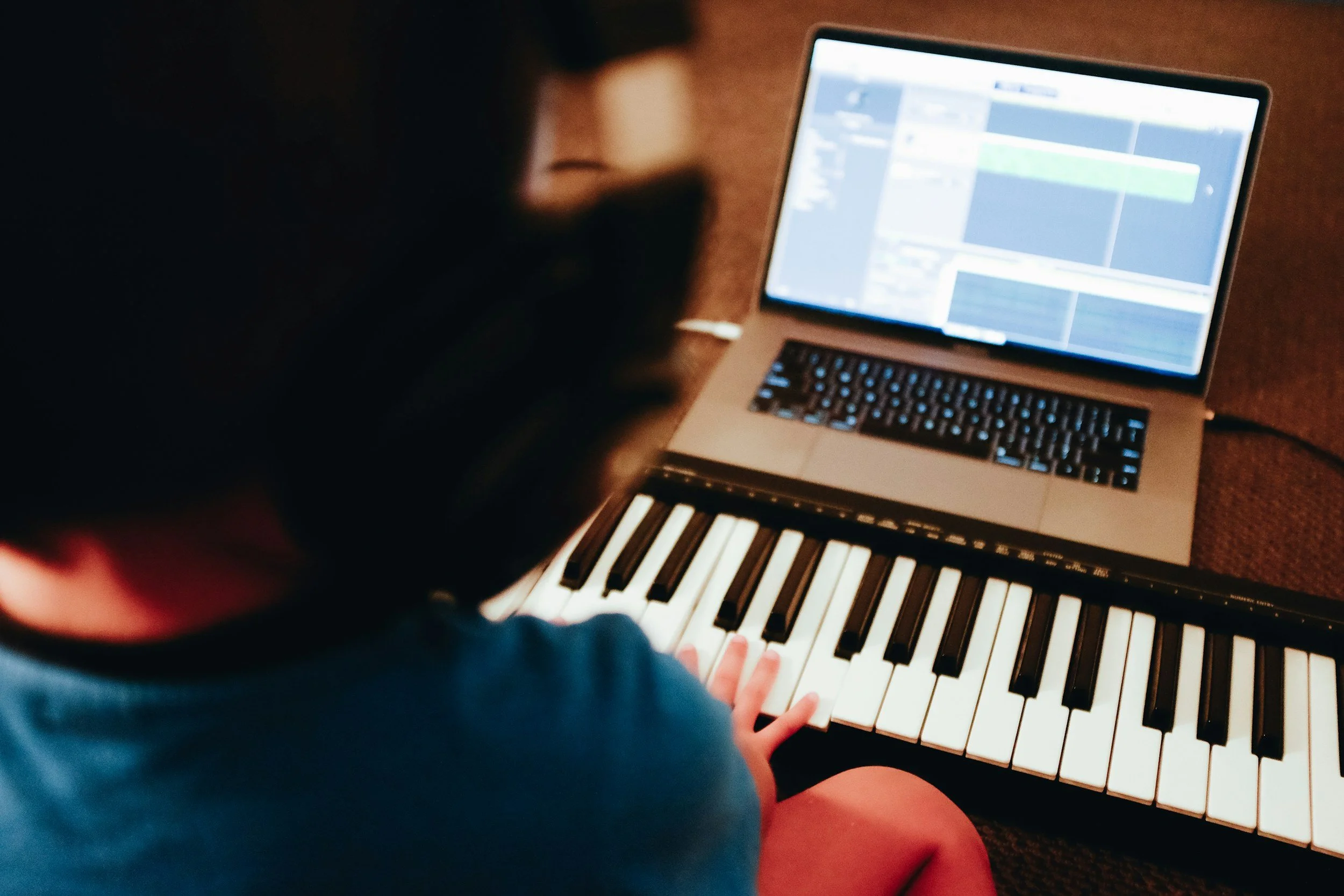
Why Online Music Lessons Can Be Worth It
Online music lessons offer several practical advantages that make them a strong option for families and students
Online Lessons Save Time
For many families, the hardest part of music lessons is not the lesson itself — it is the driving, parking, waiting, and trying to fit one more activity into an already full week.
With online lessons, students can log in from home. That means no commute, no rushing across town, and no lost time sitting in traffic. For parents, this can make it much easier to keep lessons consistent from week to week.
Consistency matters. Students usually progress more when lessons happen regularly and practice stays connected to a clear weekly plan.
Students Can Learn in a Comfortable Environment
Many students feel more relaxed at home than they do in an unfamiliar studio. This can be especially helpful for younger children, shy students, neurodiverse learners, and adult beginners who may feel self-conscious about starting music lessons.
When a student feels comfortable, they are often more willing to ask questions, try new things, make mistakes, and keep going. That kind of confidence is a big part of musical growth
Online Lessons Give Families More Instructor Options
In-person lessons limit families to whichever teachers are nearby. Online music lessons open the door to a wider range of instructors, personalities, teaching styles, and instrument specialties.
This matters because the right teacher-student match can make a huge difference. A great music teacher is not just someone who plays well. A great teacher knows how to explain clearly, encourage patiently, adjust to the student’s pace, and make lessons enjoyable
Online Lessons Can Be Very Organized
A good online lesson is not just a video call. It can include shared notes, practice assignments, recordings, links, digital sheet music, backing tracks, and follow-up materials.
This can help students and parents remember exactly what to practice after the lesson is over. For families, that organization can make music lessons feel less mysterious and more manageable
Online Lessons Can Help Students Become More Independent
Because the teacher is not physically next to the student, online lessons naturally encourage students to take more ownership of their instrument, setup, tuning, posture, practice space, and materials.
That independence can be a good thing. Over time, students learn how to prepare for lessons, solve small problems, listen carefully, and take responsibility for their own progress
Are Online Music Lessons Good for Beginners?
Yes, online music lessons can be very good for beginners — as long as the lessons are structured clearly and the teacher understands how to teach online.
Beginners need patient instruction, simple steps, repetition, encouragement, and a clear sense of what to practice between lessons. They do not need a perfect setup or years of experience to get started.
For young beginners, it can be helpful if a parent or caregiver is nearby during the first few lessons. The adult does not need to know music. They can simply help with logging in, adjusting the camera, finding lesson materials, or helping the student stay focused.
For adult beginners, online lessons can be especially appealing because they remove some of the intimidation factor. You can start from your own home, ask questions privately, and move at a pace that feels comfortable
What Equipment Do You Need for Online Music Lessons?
Most students do not need anything complicated to begin online music lessons. A simple setup is usually enough.
At minimum, students need:
A reliable internet connection
A phone, tablet, laptop, or desktop computer with a camera
A quiet, well-lit space
Their instrument
Any lesson materials provided by the instructor
For the best experience, it also helps to have:
The Zoom app installed before the first lesson
The device placed so the teacher can see the student and instrument clearly
A music stand, if using printed music
A charger nearby
A tuned instrument, when applicable
Headphones, if they improve sound or reduce distractions
Students who want to go a step further can use Zoom’s music-friendly audio settings, such as “Original Sound for Musicians.” However, beginners do not need to worry about mastering technology before the first lesson. A good instructor can help make small adjustments as needed.
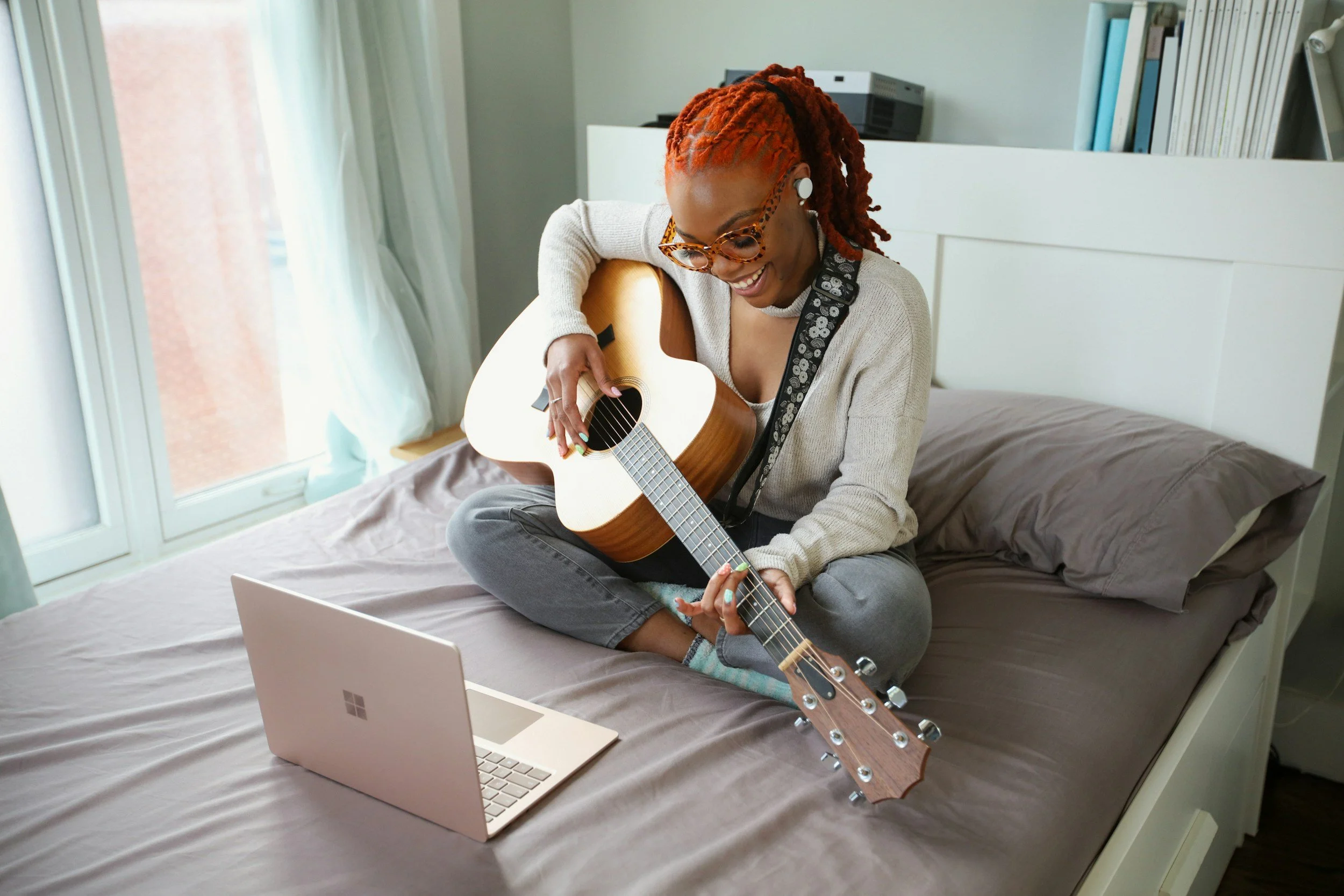
What Are the Downsides of Online Music Lessons?
Online lessons are worth considering, but they are not perfect for every student or every situation. A balanced answer should include the possible drawbacks.
The most common challenges are:
Poor internet connection
Device or camera placement issues
Background noise at home
A student who has trouble focusing on screens
Instruments that need hands-on physical adjustment
Very young students who may need extra parent support
Most of these problems can be improved with a better setup, a quieter room, a clearer camera angle, or a little help from a parent. But it is fair to say that some students may still prefer in-person lessons.
That is why a trial lesson can be so helpful. It gives the student, parent, and instructor a chance to see how the online format feels before making a longer commitment
Are Online Music Lessons Better Than In-Person Lessons?
Online lessons are not automatically better than in-person lessons. They are different.
In-person lessons can be helpful when a student needs physical adjustments, access to certain instruments, or the experience of playing in the same room with a teacher. Online lessons are often better for convenience, scheduling, comfort, consistency, and access to the right teacher.
The best choice depends on the student.
For many families, online lessons are not a compromise. They are the format that makes regular music study possible in the first place
How Much Do Online Music Lessons Cost?
The cost of online music lessons depends on lesson length, lesson frequency, teacher experience, and whether the student chooses a subscription or single-lesson option.
At La Di Da Lessons, families can choose from flexible lesson plans designed for different schedules and levels of commitment. Some students do best with weekly lessons, while others prefer a lighter schedule that still keeps music in their life.
The most important thing is to choose a plan that the student can maintain consistently. A realistic schedule is usually better than an ambitious one that becomes stressful after a few weeks.
For current rates, visit our Pricing & Plans page
How to Know If Online Music Lessons Are Worth It for Your Family
Online music lessons are usually worth it when:
The student is excited to learn an instrument or improve their singing
The family wants to avoid commute time
The student can focus for the length of the lesson
There is a reasonably quiet place at home for lessons
The teacher is experienced, encouraging, and organized
The lesson plan is personalized to the student
Practice expectations are realistic
Online lessons may not be the best fit when:
The student strongly dislikes learning on a screen
The home environment is too noisy or distracting
The internet connection is unreliable
A very young child needs more hands-on help than the family can provide
The student specifically wants an in-person ensemble, band, or group experience
What Makes Online Lessons Successful?
The most successful online music students usually have a few things in common.
First, they attend lessons consistently. Second, they practice a little between lessons. Third, they have a teacher who keeps the experience positive, organized, and appropriately challenging.
Progress does not require perfection. A student does not need to practice for hours every day. Even short, focused practice sessions can create real improvement when they happen regularly.
For children, parent support can also make a big difference. Parents do not need to be musicians. Simply helping the student remember lesson times, encouraging practice, and celebrating small wins can go a long way
Great teachers teach music — no matter the medium. The best online lessons are engaging, personalized, and goal-oriented
Are Online Music Lessons Worth It for Kids?
Online music lessons can be a great fit for kids, especially when the teacher is patient, engaging, and experienced with younger learners.
Kids often enjoy learning from home because the environment feels familiar. Parents also get the benefit of seeing how the teacher interacts with their child, what the student is working on, and how progress is developing over time.
For younger children, a parent may need to help with the first few lessons. Over time, many kids become more independent and comfortable with the routine
Are Online Music Lessons Worth It for Adults?
Yes. Online music lessons can be an excellent choice for adults.
Many adult students are balancing work, family, travel, and other responsibilities. Online lessons make it easier to fit music into real life. Adults can learn at their own pace, focus on the music they actually enjoy, and build skills without feeling judged or rushed.
Whether the goal is to learn a few songs, return to an instrument after many years, improve technique, sing with more confidence, or finally understand music theory, online lessons can provide structure and encouragement
Bottom Line: Are Online Music Lessons Worth It For Many Students?
For many students and families, yes — online music lessons are worth it.
They save time, reduce stress, offer access to excellent teachers, and make consistent music study easier to maintain. They work especially well when lessons are one-on-one, personalized, and supported by a clear practice plan.
Online lessons may not be perfect for everyone, but they are a strong option for beginners, kids, teens, adults, and busy families who want high-quality music instruction from home.
The best way to know is to try one lesson and see how it feels.
At La Di Da Lessons, our goal is to make online music lessons personal, encouraging, organized, and fun. Whether you are brand new to music or ready to take the next step, we would be happy to help you find the right instructor and lesson plan
Ready to Try an Online Music Lesson?
Book a trial lesson with La Di Da Lessons and experience how friendly, personalized online music instruction can work from the comfort of home

Frequently Asked Questions
-
Yes. Online music lessons can be very effective when they are live, one-on-one, and taught by an experienced instructor. Students can receive real-time feedback, ask questions, work on technique, and follow a personalized practice plan from home.
-
Yes. Beginners can do very well with online music lessons, especially when the teacher explains things clearly and keeps the lesson simple, encouraging, and organized. Young beginners may need a parent nearby at first to help with the device, camera, or lesson materials.
-
Most students need a reliable internet connection, a phone, tablet, or computer with a camera, a quiet and well-lit space, and their instrument. A music stand, charger, tuned instrument, and Zoom app can also help the lesson run smoothly.
-
Online music lessons offer something YouTube videos cannot: personal feedback. Videos can be useful, but they cannot watch your playing, correct mistakes, answer questions, adjust the pace, or create a plan based on your goals.
-
Many students make the best progress with weekly lessons, but some families prefer two or three lessons per month. The best schedule is one that the student can maintain consistently without feeling overwhelmed.
-
Yes. Many children learn very well online, especially when lessons are engaging and age-appropriate. A parent may need to help younger children at first, but many students become more independent once they understand the routine.
-
The best age depends on the child, the instrument, and the student’s attention span. Some children are ready around age five or six, while others do better starting later. A trial lesson is a helpful way to determine readiness.
-
Yes. Online lessons can work well for piano, guitar, voice, ukulele, violin, viola, drums, electric bass, and other instruments. Each instrument may require a slightly different camera angle or setup, but a good instructor can help with that.